Make an appointment
Contact us
Download our brochures
News Events Resources Contact
MAKE AN APPOINTMENT

International semester Building life cycle management

The Building Life Cycle Management programme offers a focused introduction to architectural design and the full life cycle of buildings.
Open to students with a bachelor-level degree in building, civil engineering, architecture, or related fields, it delivers a 4.5-month autumn curriculum taught by international experts.
Courses, workshops, modelling sessions, and technical visits build skills in circular economy principles, facility management, smart buildings, and sustainable construction.
Interdisciplinary projects strengthen collaboration across design, sustainability, and building operations.
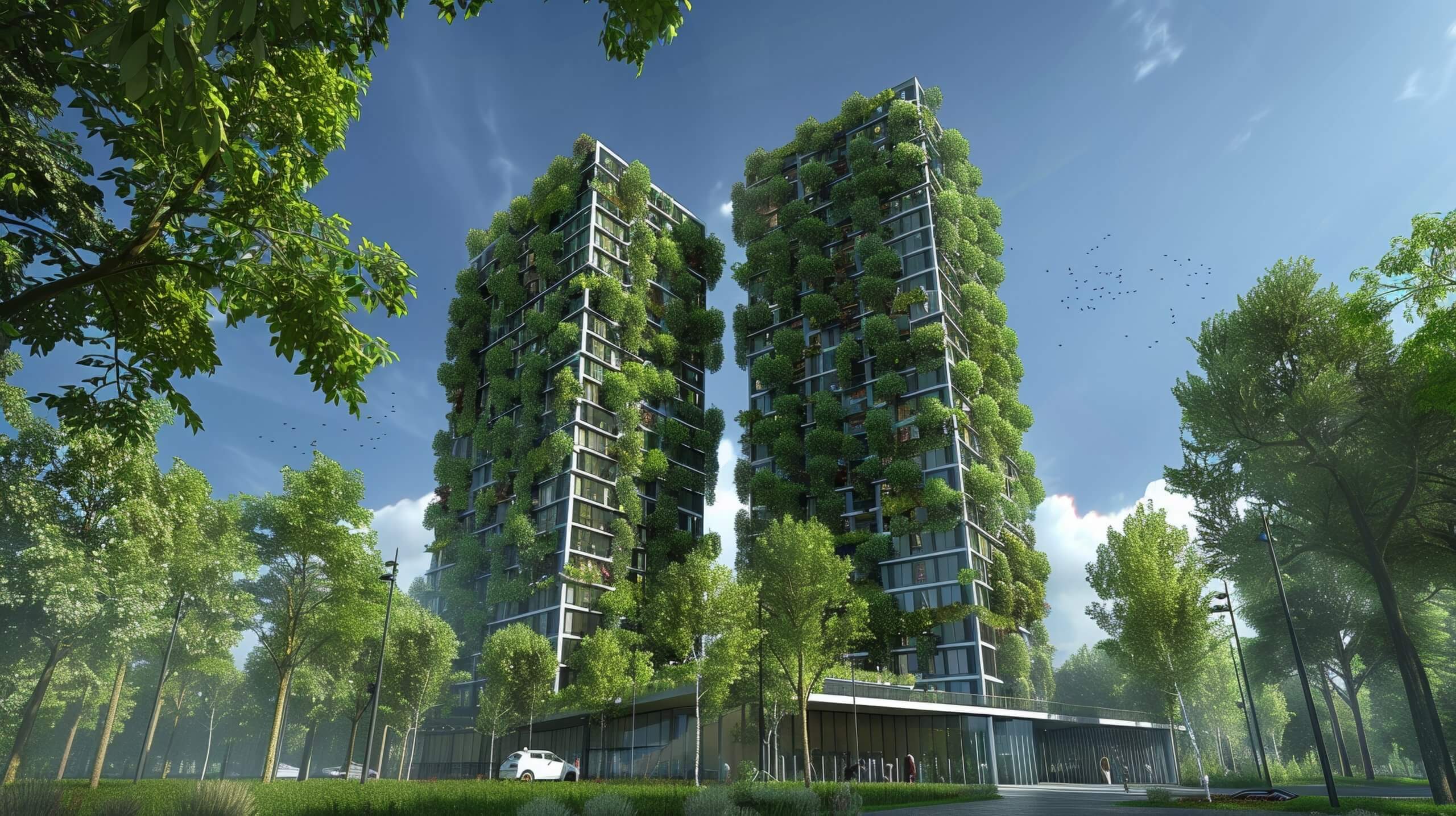
Visualisation of a twin green building project using BIM, highlighting sustainable design features and energy efficiency.

Contents

Mastering Architectural Design and Building Life Cycle Management

This programme is designed for students who have completed three years of study in civil engineering, architecture, or a related field and who wish to gain an in-depth understanding of architectural design and the full life cycle of buildings-from conception and construction to operation, maintenance, and sustainability management.

Over 4.5 months, students will be taught by more than 50 international experts through a combination of theoretical courses, applied workshops, digital modelling sessions, collaborative projects, and technical visits.

This semester takes place in the autumn.

Programme Objectives

This semester aims to train engineers capable of:

  • Applying the principles of Circular Economy in Real Estate to optimise resource use, reduce waste, and promote sustainable construction practices
  • Managing building operations effectively through Facility Management strategies, ensuring long-term performance and occupant satisfaction
  • Collaborating on complex, interdisciplinary challenges in the Global Project module, integrating design, sustainability, and management considerations
  • Designing and implementing Smart Buildings that leverage digital technologies and automation for energy efficiency, comfort, and operational optimisation
  • Developing expertise in Sustainable Buildings, including energy performance, environmental impact assessment, and low-carbon construction strategies

This programme emphasises a multidisciplinary and hands-on approach to meet the current and future needs of the building sector.

Teaching Program - Programme - S9 (Building Life-Cycle Management) & S10

 UE × 5/5/10/5/5 ECTS.

  • Circular Economy in Real Estate60 h - 5 ECTS
  • Facility Management60 h - 5 ECTS
  • Global Project72 h - 10 ECTS
  • Smart Buildings60 h - 5 ECTS
  • Sustainable Buildings66 h - 5 ECTS

ECUE - Introduction to Real-Estate Economics & Management
Duration: 12 h
Expected Learning Outcomes
  • Read a project pro-forma; explain green-lease clauses and ESG drivers.
  • Map stakeholders, contracts and value creation in RE projects.
Indicative content
  • Market cycles, valuation, green leases, financing basics.
  • Risk/return profiles; governance & contracts in RE ops.


ECUE - Life-Cycle & Total-Cost Analysis
12 h
Expected Learning Outcomes
  • Model project cash-flows and interpret LCC indicators (NPV, TCO).
  • Compare variants using eLCC and sensitivity analysis.
Indicative content
  • eLCC, NPV, social-costing; KPI dashboards & reporting.
  • CAPEX/OPEX breakdown; risk allowances.


ECUE - Land-Use, Space & Adaptability
Expected Learning Outcomes
  • Analyse adaptability potential and reversible-use scenarios.
  • Integrate density, space metrics and user needs in concepts.
Indicative content
  • Density, reversibility, functional mix; space KPIs.
  • Regulatory & design levers for adaptability.
 
ECUE - Resilient & Future-Proof Solutions
Expected Learning Outcomes
  • Draft a resilience strategy using 2050 climate scenarios.
  • Argue robustness and business-continuity measures.
Indicative content
  • Hazards & robustness matrices; adaptation pathways.
  • Insurance, continuity & retrofitting levers.


ECUE - Circular Renovation Strategies
Expected Learning Outcomes
  • Develop a circular renovation concept at building/cluster scale.
  • Specify urban-mining, DfD and reuse provisions.
Indicative content
  • Urban mining, design-for-disassembly, reuse logistics.
  • KPIs & business models for circularity.

ECUE - Introduction - Principles, Processes & Procedures
Expected Learning Outcomes
  • Explain FM scope & strategic role (ISO 41001, EN 15221).
  • Map core processes and stakeholders over the asset life-cycle.
Indicative content
  • FM scope, management systems, asset life-cycle.
  • Process mapping, roles & governance.


ECUE - Facility Planning & FM Strategy
Expected Learning Outcomes
  • Develop an FM brief & space programme aligned with corporate goals.
  • Build scenario-based test-fits and translate them into FM requirements.
Indicative content
  • Demand analysis, space programming, long-range planning.
  • Make/Buy options, strategic alignment, road-mapping.


ECUE - HR Management & Workplace Productivity
Expected Learning Outcomes
  • Diagnose productivity blockers and propose HR/space actions.
  • Define workplace KPIs (absenteeism, engagement, utilisation).
Indicative content
  • Ergonomics, hybrid work, motivation, change impacts.
  • Well-being, inclusivity and space policies.


ECUE - Health, Safety & Security
Expected Learning Outcomes
  • Build a basic HSE plan and business-continuity checklist.
  • Perform a simple risk assessment and propose mitigations.
Indicative content
  • Risk hierarchy, BCM, crisis management.
  • Legal/regulatory basics; drills & audits.


ECUE - Outsourcing, Procurement & Partnerships
Expected Learning Outcomes
  • Draft service specs and KPI-based SLAs; run a compliant tender.
  • Use an evaluation matrix and negotiate value-based adjustments.
Indicative content
  • Make/Buy, SLAs, tendering, contract KPIs & penalties/bonuses.
  • Performance-based procurement and contract governance.


ECUE - Performance Management
Expected Learning Outcomes
  • Select KPI families and build a dashboard & commentary.
  • Perform variance analysis and propose corrective actions.
Indicative content
  • Benchmarking, SLA/OLA reviews, reporting cadence.
  • Continuous-improvement loops (PDCA/Lean).


ECUE - Maintenance Management
Expected Learning Outcomes
  • Compute MTBF/availability and plan a maintenance budget.
  • Prioritise work orders and choose strategies (RCM vs TBM).
Indicative content
  • Preventive vs predictive, CMMS, reliability basics.
  • Resource planning, spare parts & SLAs.


ECUE - Information Management
Expected Learning Outcomes
  • Configure a CDE and export/validate COBie.
  • Define Asset Information Requirements and CAFM/CMMS data flows.
Indicative content
  • CDE, COBie, CAFM integrations; information handover.
  • Governance, roles, audits & data-quality rules.


ECUE - Change Management & Innovation
Expected Learning Outcomes
  • Design a change roadmap and a pilot/quick-win.
  • Stakeholder analysis and tailor communications (ADKAR/Kotter).
Indicative content
  • Innovation scans, pilots, value cases.
  • Communication plan, adoption metrics, retrospectives.

ECUE - Multidisciplinary Project Management (CPM)
Expected Learning Outcomes
  • Structure a multi-trade WBS, plan dependencies and manage interfaces (interface matrix, RACI, reviews).
  • Steer progress with milestones, risks & change logs; run effective coordination meetings (design/BIM issues).
Indicative content
  • WBS, governance, interface management; coordination routines & design reviews, issue tracking.
  • Progress measurement & reporting (milestones, Earned-Value lite), risk & change control.


CUE - Corporate Social Responsibility
Expected Learning Outcomes
  • Apply CSR & ethics to the project (materiality, stakeholders, code of conduct).
  • Define indicators, governance and reporting rhythms.
Indicative content
  • Materiality & stakeholder mapping; responsible procurement.
  • Reporting frameworks (GRI/ESG), KPI dashboard.


ECUE - Intercultural Team Management
Expected Learning Outcomes
  • Collaborate effectively in international teams; anticipate bias & conflict.
  • Adapt communication to cultural profiles; run effective remote meetings.
Indicative content
  • Intercultural models (Hofstede, Lewis); feedback & conflict resolution.
  • Remote collaboration rituals, facilitation & decision-making.


ECUE - Project Management (Synthesis)
Expected Learning Outcomes
  • Consolidate scope, cost, schedule & risk into an integrated management plan.
  • Prepare governance pack: RACI, meeting map, reporting & decision rules.
Indicative content
  • PMBoK overview; integration with CPM & CSR streams.
  • Gate reviews, baselines, change requests.

ECUE - Introduction - User-Adapted & Smart Buildings
Expected Learning Outcomes
  • Define smart-building KPIs and maturity levels.
  • Identify core use-cases and value drivers for owners/occupants.
Indicative content
  • Typologies, ISO 30145, maturity models; benefits panorama.
  • Data & services landscape (BMS, IoT, analytics).


ECUE - Building-Performance Follow-up, Measurement & Optimisation

Expected Learning Outcomes
  • Build a performance KPI dashboard and detect drift with basic FDD.
  • Set baselines and outline an M&V plan (IPMVP-lite).
Indicative content
  • BMS data, retro-commissioning, FDD methods.
  • Analytics/visualisation; anomaly triage & actions.


ECUE - Big-Data, Inter-connectivity, Cloud/IoT, ML & AI
Expected Learning Outcomes
  • Set up a simple IoT stack and pipeline; train a baseline ML model.
  • Assess data quality, privacy and cyber-security constraints.
Indicative content
  • Edge vs cloud, digital twins, data pipelines & storage.
  • Intro ML models & evaluation; governance & security basics.


ECUE - User-Adaptation & Human-Building Interaction
Expected Learning Outcomes
  • Prototype a UX dashboard and feedback loops (nudging).
  • Design a behaviour-change experiment with clear metrics.
Indicative content
  • UX design, surveys, comfort & feedback channels.
  • Privacy, consent, A/B tests & evaluation.


ECUE - Smart Materials
Expected Learning Outcomes
  • Evaluate suitability and trade-offs of smart materials.
  • Quantify life-cycle/maintenance implications vs conventional options.
Indicative content
  • PCMs, electrochromic façades, self-healing materials.
  • Integration constraints, reliability & maintainability.


ECUE - From Smart Buildings to Smart Cities
Expected Learning Outcomes
  • Map building-city data flows and interoperability needs.
  • Propose a district-level data integration storyboard (use-cases, actors).
Indicative content
  • City platforms, standards, resilience & flexibility markets.
  • District-scale case studies; governance & business models.

ECUE - Introduction - Triple-Bottom-Line (TBL) Approach
Expected Learning Outcomes
  • Apply the TBL lens to concept options and stakeholder value.
  • Translate TBL into measurable KPIs and trade-off charts.
Indicative content
  • People-Planet-Profit metrics; ESG & materiality; decision framing.
  • Case reviews and TBL scorecards.


ECUE - Bioclimatic Architecture
Expected Learning Outcomes
  • Optimise orientation/form using climate charts; propose passive solutions.
  • Quantify passive gains and comfort hours with simple calcs.
Indicative content
  • Climate analysis, shading, natural ventilation; comfort targets.
  • Early-stage sizing and quick models.


ECUE - High-Performance Buildings & Resource Efficiency
Expected Learning Outcomes
  • Size envelope/RES for NZEB; evaluate embodied & operational impacts.
  • Build an energy balance and justify choices with LCC.
Indicative content
  • Passive House/NZEB, embodied carbon, RES options.
  • Trade-offs, cost & LCC basics; compliance checks.


ECUE - Integrated Systems Approach to Building-Services Design
Expected Learning Outcomes
  • Produce concept diagrams balancing loads, RES and controls.
  • Draft control logic (functional scheme) and commissioning plan.
Indicative content
  • HVAC, renewables, controls integration; operability.
  • Commissioning, metering & handover.


ECUE - Modelling Tools for High-Performance Design
Expected Learning Outcomes
  • Build a parametric model and run quick LCA/comfort scenarios.
  • Automate sensitivity studies and present results clearly.
Indicative content
  • Rhino/Grasshopper-Ladybug; OneClick LCA (or eq.).
  • Data exchange workflows; QA/QC routines.


ECUE - Buildings → Clusters → Precincts → Cities
Expected Learning Outcomes
  • Explain scale effects; assess district energy & mobility solutions.
  • Compare two district scenarios using KPIs (energy, comfort, CO₂).
Indicative content
  • District heating/cooling, eco-district case studies.
  • KPIs, governance & financing models.


Why Choose This Semester at BUILDERS School of Engineering?

A unique multidisciplinary programme:
Integrating construction techniques, economics, law, and environmental aspects.

High-quality teaching:
Delivered by more than 50 international experts from partner universities and industry.

A professional, hands-on approach:
Including real-world projects, technical visits, and laboratory work.

Immersion in an international environment:
Encouraging intercultural exchange and academic collaboration.

A strong career asset:
Developing cross-disciplinary skills that are highly valued in the building and infrastructure sectors.

Campus: Caen
Applications: Open to French and international students.

Semester : Autumn semester, from September to January