Make an appointment
Contact us
Download our brochures
News Events Resources Contact
MAKE AN APPOINTMENT

International Semester Sustainable construction using BIM

The international semester Sustainable Building using BIM at BUILDERS Engineering School is an advanced programme in sustainable construction and digital modeling. This program is intended for students who have completed three years of studies in civil engineering or a related field and who wish to develop expertise in building design and management through BIM (Building Information Modeling) and sustainable approaches.
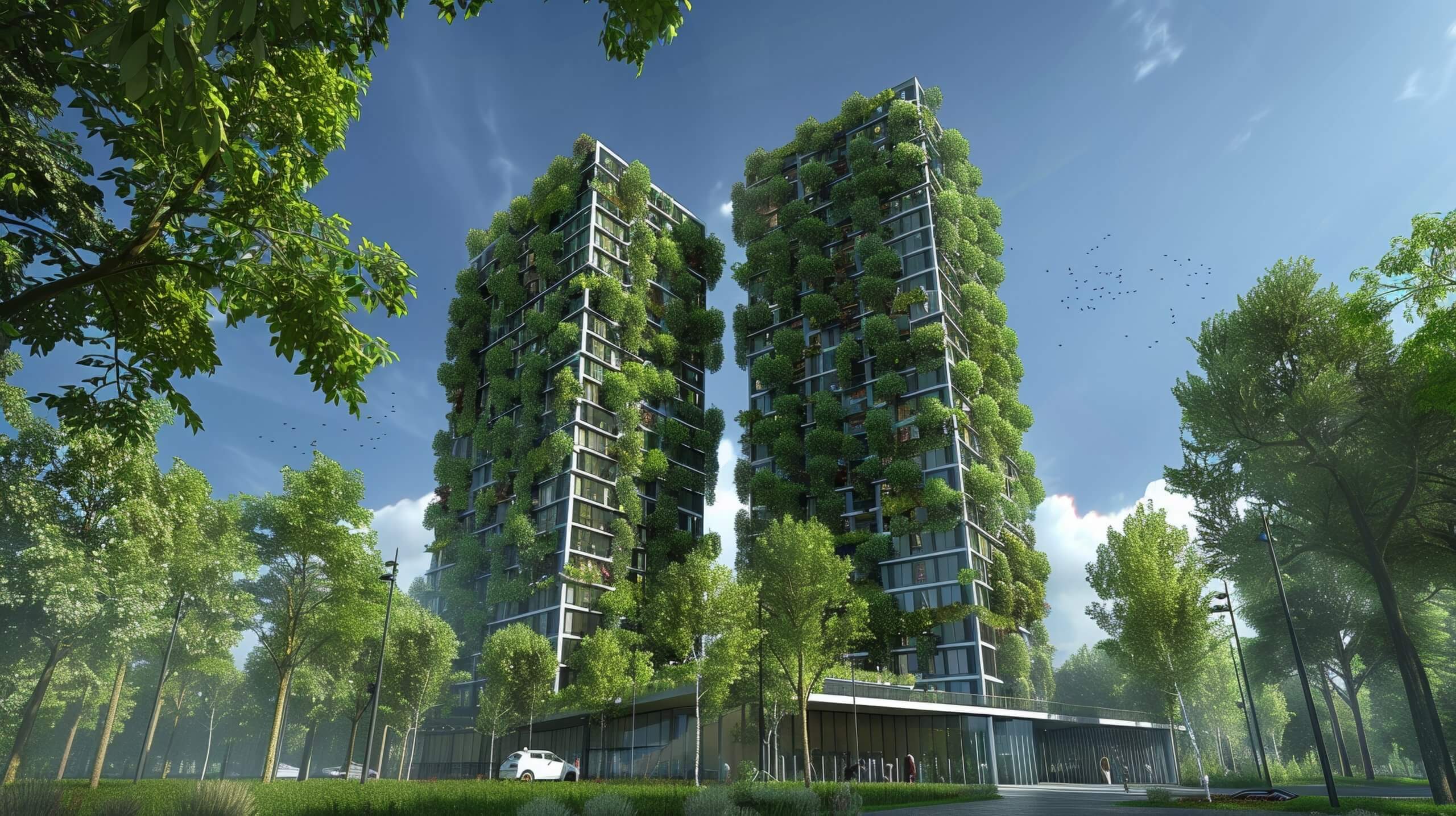
Visualisation of a twin green building project using BIM, highlighting sustainable design features and energy efficiency.

Contents

Building Sustainably with BIM and Digital Technologies

Over 4.5 months, students will evolve in a multicultural and innovative environment, combining academic courses, practical projects, technical visits, and laboratory work.

This semester takes place in the spring.

Programme Objectives

This semester aims to train engineers capable of:

  • Mastering BIM and its applications for the management of buildings and infrastructures
  • Optimising building design by integrating sustainable and circular approaches
  • Analysing and improving building performance in terms of energy, environment, and comfort
  • Understanding and applying the principles of Lean Construction to optimise construction processes
  • Developing a technical and functional approach to buildings and their infrastructures
  • Collaborating on real-world projects through technical visits and laboratory experiments

This programme emphasises innovation and practical application to prepare students for the current and future challenges of the construction industry.

TEACHING Program - Semester 8 (S8) - Sustainable Building using BIM

  • UE1-1 - Recycling, Sustainable Materials & Wood-Concrete Composites
Duration: 4 h
Prerequisites
  • Basics in construction materials (FRP/wood/concrete).
Expected Learning Outcomes
  • Explain circular-economy stakes applied to structural materials.
  • Describe principles of timber-concrete composites and selection criteria.
Indicative content
  • Reuse, recycling, LCA of materials.
  • Timber-concrete connectors, stiffness, typical assemblies.


  • EU1-2 - Recycling... - Site Visit
Duration: 3 h
Prerequisites
  • UE1-1 advised.
Expected Learning Outcomes
  • Observe reuse/recycling value chains on site.
  • Assess logistics, quality control and traceability constraints.
Indicative content
  • Sorting platform / materials hub.
  • Quality, traceability, lessons learned.


  • UE1-3 - Numerical Modelling & Design of RC/Masonry for Seismic - Lab
Duration: 8 h
Prerequisites
  • Seismic basics (ELF/modal); EC8 intro.
Expected Learning Outcomes
  • Model and check RC/masonry elements under seismic actions (EC8).
  • Interpret results and adapt detailing.
Indicative content
  • Simplified models, spectra, capacity/ductility.
  • Details for walls/slabs/beams/columns.


  • UE1-4 - Intuitive Analysis of Complex Building Typologies
Duration: 8 h
Prerequisites
  • Global stability & load paths.
Expected Learning Outcomes
  • Identify structural mechanisms of complex buildings.
  • Propose robust static schemes.
Indicative content
  • Towers, long-span halls, cantilevers, exoskeletons.
  • Robustness, redundancy, progressive collapse.
SDG 9
 
  • UE1-5 - Composite Structure for BIM Design - Lab
Duration: 8 h
Prerequisites
  • EC4 basics; BIM authoring tools.
Expected Learning Outcomes
  • Design composite floor systems and integrate data in a BIM model.
  • Coordinate structure-architecture-MEP interfaces.
Indicative content
  • Composite slabs, connectors, deflection/serviceability.
  • IFC exchanges, material attributes, coordination views.


  • UE1-6 - Timber Structure for BIM Design - Lab
Duration: 8 h
Prerequisites
  • EC5 notions; CLT/glulam systems.
Expected Learning Outcomes
  • Check timber elements and specific details.
  • Account for prefabrication and tolerances in the model.
Indicative content
  • Connections, vibration, fire.
  • BIM: families, templates, clash checks.
 
  • UE1-7 - Reliability of Prestressed Structures
Duration: 4 h
Prerequisites
  • Prestressing principles; losses.
Expected Learning Outcomes
  • Explain the benefits/risks of prestressed concrete in buildings.
  • Identify inspection/maintenance requirements.
Indicative content
  • Losses, anchorages, deviators.
  • Pathologies, durability, monitoring.


  • UE1-8 - Earth & Bio-sourced Construction
Duration: 4 h
Prerequisites
  • Bio-based materials basics.
Expected Learning Outcomes
  • Identify properties/constraints of earthen and bio-sourced materials.
  • Select relevant applications in structure/envelope.
Indicative content
  • Rammed earth, hemp, bio-insulation.
  • Moisture, ageing, certifications.


  • EU1-9 - Earth & Bio-sourced - Lab
Duration: 4 h
Prerequisites
  • UE1-8 advised.
Expected Learning Outcomes
  • Characterize samples and interpret test results.
  • Proposes implementation provisions.
Indicative content
  • Lab tests (compression, hygroscopic behaviour).
  • Protocol, variability, acceptance criteria.


  • UE1-10 - Numerical Modelling & Design of RC/Masonry for Seismic - Lecture
Duration: 8 h
Prerequisites
  • EC8 basics; structural dynamics.
Expected Learning Outcomes
  • Select appropriate modelling and justify assumptions/limits.
  • Check elements and justify seismic detailing.
Indicative content
  • Modal/ELF analyses, simple non-linearity.
  • Regulatory framework and case studies.

  • UE2-1 - Research Methods in Civil Engineering
    Duration: 9.5 h
    Prerequisites
    • Basic scientific method.
    Expected Learning Outcomes
    • Formulate a research question; set up DOE and data-collection strategy.
    • Structure a mini-project (ethics, literature review, reproducibility).
    Indicative content
    • Hypotheses, metrics, DOE, bias.
    • Critical reading, citation, data management.


  • UE2-2 - Building Pathology, Maintenance & Retrofitting
Duration: 12 h
Prerequisites
  • Structures/materials basics.
Expected Learning Outcomes
  • Diagnose common pathologies and propose remediation.
  • Plan maintenance and monitoring.
Indicative content
  • Concrete/steel/wood defects; envelope issues.
  • Inspection, testing, repair plans.


  • UE2-3 - Circular Innovation in Different Economic Sectors
Duration: 8 h
Prerequisites
  • Intro to circular economy.
Expected Learning Outcomes
  • Explain industrial symbiosis and circular levers applied to construction.
  • Build a mini circularity business case.
Indicative content
  • Reuse, secondary materials, reverse logistics.
  • Business models and regulatory frameworks.


UE2-4 - Project Management in a BIM Environment
Duration: 9 h
Prerequisites
  • Project management (WBS/Gantt); basic BIM.
Expected Learning Outcomes
  • Define a management strategy (BEP) and steer cost/schedule/quality.
  • Set up coordination and model reviews.
Indicative content
  • BEP, roles, workflows, design reviews.
  • EVM, risk, communication & change.


UE2-5 - Building Information Modelling & Management
Duration: 12 h
Prerequisites
  • 3D modelling; basic interoperability.
Expected Learning Outcomes
  • Produce a compliant model (LOD/LOI) and manage data/drawings.
  • Ensure IFC exchanges and clash detection for synthesis.
Indicative content
  • Modelling, schedules, attributes, templates.
  • IFC, BCF, clash detection & issue tracking.

  • UE3-1 - Advanced Technologies for Plus-Energy Buildings & Communities
Duration: 15 h
Prerequisites
  • Building physics/energy basics.
Expected Learning Outcomes
  • Compare PEB solutions and self-consumption/storage scenarios.
  • Argue a techno-economic-environmental choice.
Indicative content
  • PV/solar, storage, BMS, micro-grids.
  • PEB indicators, comfort & operation.


  • UE3-2 - Reliability & Failure Prognostics in Civil Engineering
Duration: 12 h
Prerequisites
  • Probability/statistics; material durability.
Expected Learning Outcomes
  • Describe reliability/PHM concepts and indicators.
  • Set up a prognosis/maintenance approach.
Indicative content
  • Reliability, uncertainties, digital twins.
  • Prognostics & Health Management.


  • UE3-3 - Envelope (Esthetics, Energy, Air, Water, Vapor, Sound)
Duration: 4 h
Prerequisites
  • Building physics.
Expected Learning Outcomes
  • Identify envelope functions/performances and critical interfaces.
  • Prevent defects and non-quality.
Indicative content
  • Airtightness/watertightness, thermal bridges, moisture, acoustics.
  • Critical details and QA checks.


  • UE3-4 - Spaces (Function, Comfort, Accessibility, Light, Sound)
Duration: 8 h
Prerequisites
  • Ergonomics & accessibility regulations.
Expected Learning Outcomes
  • Build a functional diagram and comfort criteria.
  • Integrate accessibility & uses into design.
Indicative content
  • Visual/thermal/acoustic comfort.
  • Circulations, ADA/PMR, space-structure interactions.


  • UE3-5 - Superstructures - Why Things Don't Fall Down
Duration: 4 h
Prerequisites
  • Strength of materials.
Expected Learning Outcomes
  • Relate structural system choices to stability/serviceability.
  • Identify failure modes and safety margins.
Indicative content
  • Static schemes, stability and ductility.
  • Illustrated cases and lessons from failures


  • UE3-6 - Building Physics
Duration: 8 h
Prerequisites
  • Heat/air/vapour for transfer.
Expected Learning Outcomes
  • Describe balances and envelope-uses-climate interactions.
  • Passive comfort solutions.
Indicative content
  • Heat transfer, inertia, ventilation.
  • Simple simulation and standards


  • UE3-7 - Dealing with Hazards
Duration: 4 h
Prerequisites
  • Basics in fire/seismic/hydraulic safety.
Expected Learning Outcomes
  • Identify hazards (fire, earthquake, flood) and risk-reduction solutions.
  • Integrate operation/evacuation constraints.
Indicative content
  • Passive/active protection, compartmentation.
  • Evacuation, redundancy and resilience.


  • UE3-8 - Infrastructure & Foundations
Duration: 4 h
Prerequisites
  • Applied geotechnics.
Expected Learning Outcomes
  • Relate infrastructure/foundation choices to loads/soils.
  • Identify interfaces and key detailing.
Indicative content
  • Foundation types, slabs-on-grade, soil-structure interaction.
  • Utilities, deformations, site QA/QC.


  • UE4-1 - Integrated Design Project
    Duration: 30 h
    Prerequisites
    • BEP & coordination tools; basic modelling.
    Expected Learning Outcomes
    • Develop a preliminary proposal with an integrated, model-based approach.
    • Justify choices with thermal/structural/LCA analyses and early-stage costing.
    Indicative content
    • BIM execution planning, workflows, multi-criteria iterations.
    • Deliverables: client package, design reviews, professional pitch.

  • UE5-1 - Techniques for Building Rehabilitation, Restoration & Conservation
Duration: 9 h
Prerequisites
  • Structures & materials basics.
Expected Learning Outcomes
  • Compare rehabilitation/restoration techniques and justify a choice.
  • Plan diagnostics and testing.
Indicative content
  • Existing structures, defects and treatment.
  • Heritage constraints vs adaptation needs


  • UE5-2 - Housing Overcrowding: Dynamics & Challenges in the Modern Age
Duration: 6 h
Prerequisites
  • Urban planning / urban sociology basics.
Expected Learning Outcomes
  • Analyse overcrowding drivers and impacts.
  • Discuss policy and design levers.
Indicative content
  • Socio-economic dynamics, density, health.
  • Planning and housing scenarios.


  • UE5-3 - Infrastructure Maintenance & Rehabilitation
Duration: 8 h
Prerequisites
  • Bridges & urban networks basics.
Expected Learning Outcomes
  • Identify maintenance priorities and operational risks.
  • Build a multi-year strategy.
Indicative content
  • Inspections, levels of service, budgets.
  • Roads, bridges, urban networks - cases
 
 
  • UE5-4 - Cities: Organisms in Transition

Duration: 1.5 h

Prerequisites
  • None.
Expected Learning Outcomes
  • Describe transition trends and implications.
  • Report conclusions from recent experiments.
Indicative content
  • Circular cities, resilience, inclusion.
  • Case studies and lessons learned.


  • UE5-5 - Introduction to Architecture, City Planning & Urban Sociology - History & Trends
Duration: 4 h
Prerequisites
  • None.
Expected Learning Outcomes
  • Identify components of the built environment and their interactions.
  • Describe major historical and current trends.
Indicative content
  • Facility typologies, urban fabrics.
  • Uses, mobility, policy evolution.


  • EU5-6 - Transformation & Adaptive Re-Use of Existing Buildings & Districts
Duration: 4 h
Prerequisites
  • Building design & codes basics.
Expected Learning Outcomes
  • Assess feasibility of change-of-use and transformations.
  • Identify technical/legal/economic issues.
Indicative content
  • Typologies, vertical extensions, conversions.
  • Risks, permits, business models.


  • UE5-7 - Urban Facility Management
Duration: 4 h
Prerequisites
  • FM basics.
Expected Learning Outcomes
  • Define urban services (energy/water/waste/IT) and KPIs.
  • Propose efficiency/quality improvements.
Indicative content
  • Service organisation, contracts, SLAs.
  • Dashboards, business continuity


  • UE5-8 - Area Networks (Energy, Water, Waste & Communications)
Duration: 8 h
Prerequisites
  • Urban networks basics.
Expected Learning Outcomes
  • Describe area networks and impact-reduction solutions.
  • Articulate networks/buildings and uses.
Indicative content
  • Energy, water, waste, digital.
  • Resilience, sobriety, governance.

  • UE6-1 - BIM Execution & Collaboration Strategy
Duration: 25 h
Prerequisites
  • BIM management basics; coordination.
Expected Learning Outcomes
  • Set up/update a BEP: organisation, information exchanges, roles.
  • Ensure decision traceability and data quality.
Indicative content
  • Project organisation, CDE, workflows, reviews.
  • Issue tracking (BCF), responsibilities and milestones.


  • UE6-2 - Design Studios & Reviews
Duration: 50 h
Prerequisites
  • Modelling, energy/structures/LCA basics.
Expected Learning Outcomes
  • Compare variants through thermo-structural-LCA/cost analyses.
  • Converge to a defendable solution for AEC professionals.
Indicative content
  • Multi-criteria iterations, digital prototypes.
  • Mid-term and final reviews, expert feedback.


  • EU6-3 - Communication, Ethics & Social Responsibility
Duration: 25 h
Prerequisites
  • Technical English recommended.
Expected Learning Outcomes
  • Integrate social/societal/environmental impacts and defend them.
  • Deliver a professional oral presentation to a jury.
Indicative content
  • Responsibility & ethics, stakeholders.
  • Project pitch, Q&A, portfolio dossier.
 

Why Choose This Semester at BUILDERS School of Engineering?

An outstanding academic and professional network:
A programme taught by more than 50 international experts from our consortium of academic and industrial partners.

An innovative programme:
A unique combination of BIM, sustainable construction, and Lean Construction methods.

Active and immersive learning:
Interactive courses, team projects, construction site visits, and access to laboratories.

An international experience:
Students from partner universities around the world, fostering cultural exchange and international collaboration.

A springboard towards the engineering careers of the future:
Development of highly sought-after skills in smart and sustainable building.

Campus: Caen
Applications: Open to French and international students.

Semester : Spring semester from February to June